
Farewell to a Friend
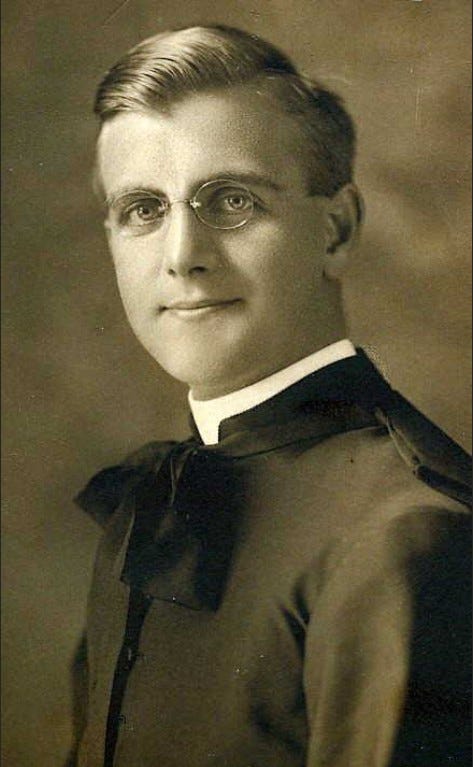
Captain Chaplin John Garbutt

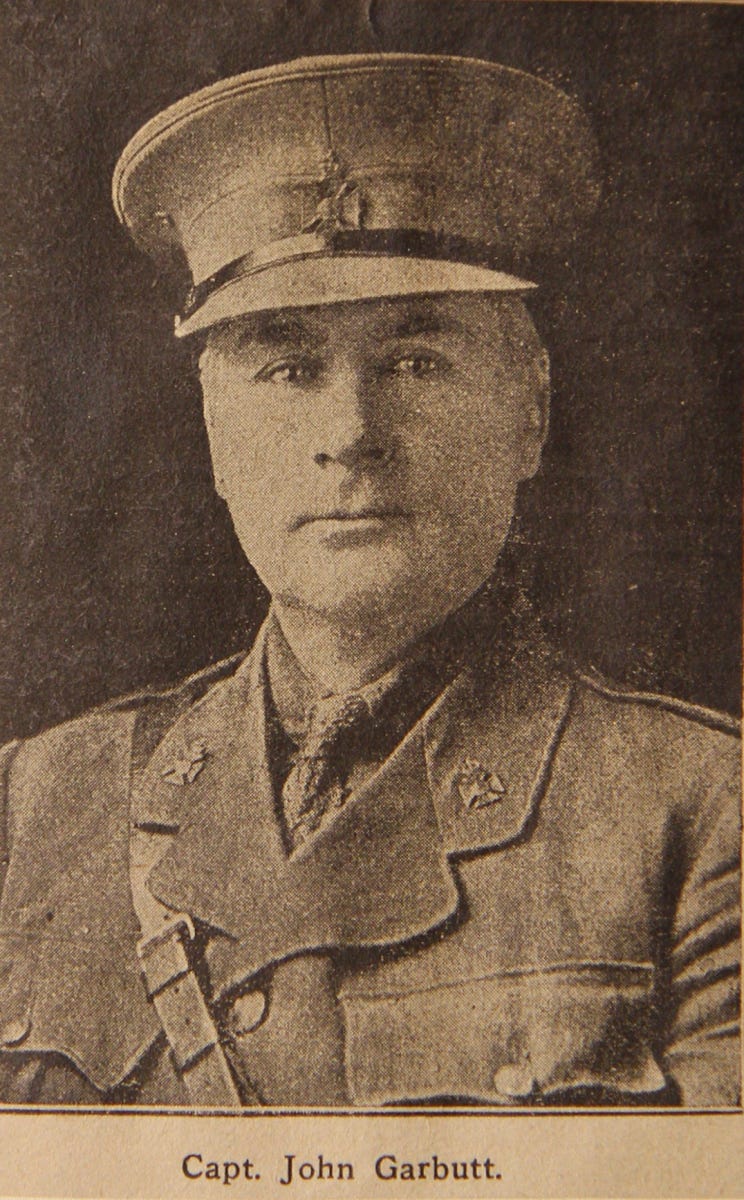
Older. Greyer. Tired. Worn. The man, distinguished in his cap with the bronze cross and long black tippet, stood behind the pulpit, and looked out at the assembled congregation in mournful resignation. He had presided over so many others, but this one differed. The individual resting before him, in the flag-draped coffin, adorned with sword and cap, was his long-time friend, brother and fellow officer. Only days before, he was preparing for a joyous reunion, yet, suddenly and unexpectedly, he was now standing before his eternal remains readying himself to say goodbye.
And the congregation before him was dead silent.
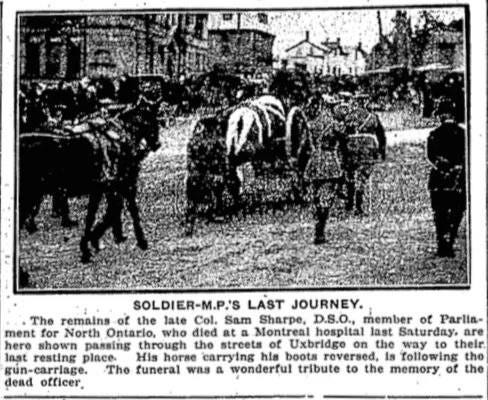
Earlier that day, the entire town including those from the surrounding farms and villages, men, women, children, all came out to attend the doleful procession. For what seemed to stretch for almost a mile, the sombre parade made its’ slow, deliberate journey to Uxbridge’s Trinity Church. At the lead were a team of regal horses, ridden by senior police and military officials. Following them, was a military band from the home guard, their drummers maintaining a steady, respectful step. Several yards behind, the coffin, his coffin, rested upon the gun carriage’s deck and trailing, in line, were the Officers and men of the battalion, sent home to recover from injuries suffered over there, some in body, some in mind. Leading the procession was the man in the white collar, chaplain Captain John Garbutt.
Only days before, the community was busy preparing for their Colonel’s return. Banners were prepared, former officers planned a personal welcome, and his church arranged a reception for his return. Now instead, the entire population of the town just queued in silent order to pass by the verandah of the family home, giving themselves one last chance to pay their last respects to their late Colonel.
The Service
All eyes fixed upon the Union Jack draped coffin. It was positioned in the centre of the chancel, facing the congregation. Flowers, wreaths, along with portraits of men from the battalion, who formerly served under the command of Sharpe were situated alongside tributes to the Colonel. These were pictures of local boys and men who did not return home, their loved ones using this unfortunate occasion to say their own goodbyes, to him, to them. Husbands. Brothers. Sons. Hutchison. Hartley. Hodges. Stephens. Sedore. Gill. Newton. All killed over there…Vimy, Lens, Passchendaele, they served and sacrificed at foreign places with foreign names.
At the appropriate time, Garbutt, attired in his tunic and white collar, approached the pulpit. He paused…so long that many individuals in the audience thought that he had froze, as if, despite having conducted hundreds of these, he suddenly did not know what to say. With trepidation, he shuffled a bit closer, looked up and out and began to talk about his friend, his friend Sam. He talked about how he was smart, sincere, thoughtful, selfless, caring, brave and pious. He talked about loyalty. How he, when given the approval to raise a battalion from his riding of Ontario North, immediately reached out to his friends, fellow masons, 34th Regiment militia members and invited them to join him in the great and noble cause. He described how brave Sam was by recalling how Sam once ventured into ‘no man’s land,’ just before a major trench raid, and personally verified that the white guide tape to direct the men towards the German lines was in place. Moments later, their position was suddenly the target of a gas attack. He remained calm to ensure his men remained calm…walking from platoon to platoon, settling them down and helping them into position. If he ordered his men in to be in danger, then he put himself in danger too. He continued and talked about how Sam stayed up late into the evenings to write letters to the families of those killed in while serving their king and country. He wrote by candlelight, explaining how he, his fellow officers and the men appreciated their son, brother, or husband and how they will all grieve his loss. And most significantly, he expressed of how deeply each soldiers’ death meant to him and the unbearable guilt it bore on his conscience.
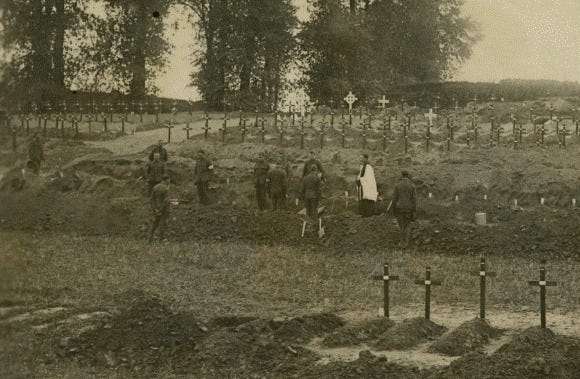
Later that day, Garbutt stood on the edge of Sam’s grave in Uxbridge Cemetery and observe the casket slowly lowered into the earth. Three volleys of gunfire then bellowed across the cemetery and cascaded across and through the nearby town. The ceremony concluded with the playing of the Last Post and then Garbutt, with his arm outstretched, sprinkling a fistful of dirt on the grave of his friend.
He continued…
“Earth to earth, ashes to ashes, dust to dust.”
“Earth to earth, ashes to ashes, dust to dust…”
The words effortlessly rolled off his tongue, entrenched into his mind by the countless times he conducted trench-side funerals. It is notable that, although Sharpe personally selected Garbutt to be his first chaplain, Garbutt was not with the unit when they deployed to France. Apart from funerals for the odd soldier who died from illness or misadventure, the first man from his own battalion whose funeral he presided over from injuries incurred in the war may have been for his good friend Sam Sharpe.
This biography will focus on the life and service of Chaplain Captain John Garbutt but will also touch on the other chaplains that served with the 116th. We will also explore both the conventional and non-conventional duties of the chaplain to better appreciate the service he provided. It is important to uncover and explain these duties so we can better appreciate how they maintained the moral and administrative welfare of the unit.
First, a bit on John Garbutt. He was born in Pickering, Yorkshire England in 1865. The second of eight children, he received his schooling in England and at the age of twenty-one decided to emigrate to Canada. He settled in the area around the Bay of Quinty and became a Methodist minister. Over the next three decades he dedicated himself to servicing the spiritual needs of Canadians. His ministries included residences in Bowmanville, Port Hope and Oshawa. In 1916, when the winds of war whipped through Ontario, Garbutt, who now 48 years of age, could easily have excused himself from enlisting. Instead, a combination of youthful exuberance and the longstanding personal friendship he held with Lieutenant Colonel convinced him to join the war effort. He received the rank of Hon. Captain and the joined the 116th Battalion as their chaplain.
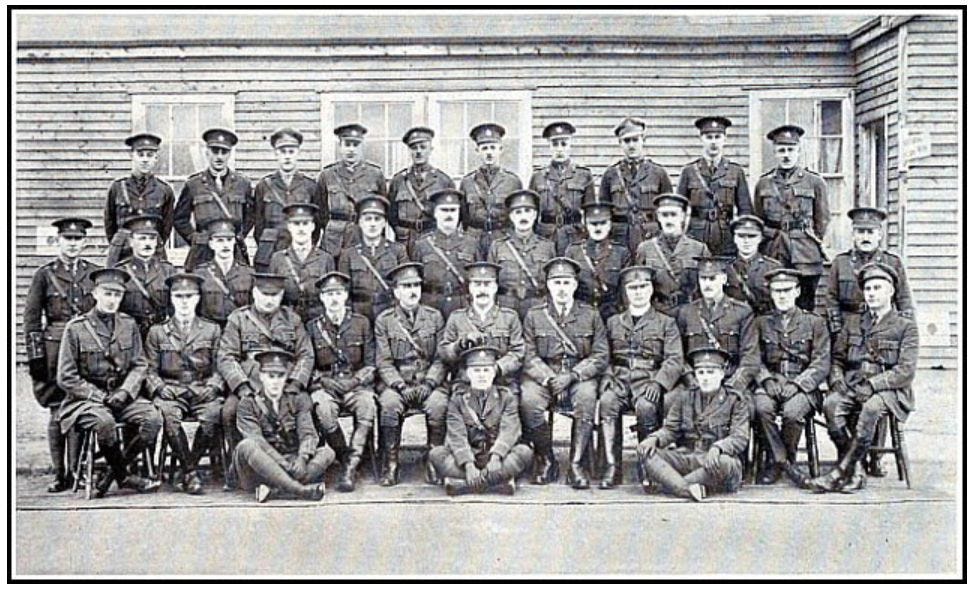
Garbutt and Sharpe were longtime friends and brothers. Not siblings, rather both were freemasons and attended lodges within Ontario North County. It is notable that during the time of the Great War, freemasonry was a highly respected fraternal organization that functioned as an elite network for leaders within communities. To be a freemason did not require someone to be ‘elite’ however they often were. As such, at least five Majors and three Captains from the original 116th Battalion contingent were also freemasons. This unique circumstance demonstrated the degree of comradeship and bond shared amongst the men of the 116th and how their fraternity allegiances extended to their military service.
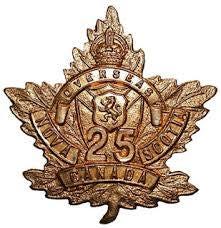
Garbutt signed up as an Officer with the 116th in March 1916. In addition to providing religious instruction, he attended community events, helped in recruitment, and assisted the Lt. Col. raise money for the battalion. The unit proceeded to England in September 1916. He remained a member of the 116th until February 1917 when the battalion joined the 9th Brigade. Garbutt was then transferred to the 5th Brigade of the 2nd Division. The 5th Brigade included the 25th Nova Scotia Rifles, the 22nd Canadian Francais - Vandoos, the 24th Victoria Rifles and the 26th New Brunswick Battalions. These units played integral roles in the Battle of Vimy Ridge where they were responsible for the section of front that included the sector to the north of the village of Thelus. Between May and July, they rotated in and out of the front between the cities of Lens and Vimy participating in trench raiding on German positions. It was here where Garbutt learned the tragedy of war, officiating numerous trench-side funerals. These notable battlegrounds included: Villers-au-Bois, Ecoivres, Berthonoval Wood, Vimy Ridge, La Coulette, Avion, Cite St. Pierre and portions of the line at Hill 70 (Cite St. Auguste, Ste. Emile, and the northern sectors of the Hill 70 battlefield).
Garbutt’s service term ended four days before the attack on Hill 70. Upon receiving leave, he proceeded to England, immediately declared surplus and ordered home to Canada. Upon arrival, the Canadian Chaplaincy Services reassigned him to the Office of the Adjutant General. The Adjutant General was responsible for the ‘human side of the war,’ and included areas such as recruitment, organization, military discipline, casualty reporting, awards and decorations and the process and management of discharging soldiers from the service.
When the 116th Battalion joined the 9th Brigade (replacing the 60th Victoria Rifles), their brother units included the 43rd, 52nd and 58th Battalions. The chaplain assigned to the 9th was Reverend Robert Weston Ridgeway. Ridgeway was an Irish-born clergyman who emigrated to Canada and settled in Grosse Isle, Manitoba. He remained attached to the brigade for the duration of the war and earned a Military Cross and Bar while serving with the brigade. He was also Mentioned in Dispatches. The other chaplains assigned to the 116th included Padre Father Arthur Basil Cote. Cote was a Catholic Priest from Lindsay, ON and joined the battalion in August 1917, only days after the Battle of Hill 70. While the Battalion Diary does not mention Cote, the diary of Medical Officer, Captain Tillman Alfred Briggs provides more references to the chaplain. His Great War diary regularly mentions the Padre and hints at a close relationship forming between the two officers. Cote served in the battalion, alongside Ridgeway, until the armistice. At that time, Roman Catholic Priest and Chaplain, Rev. Paul Costello of Peterborough, ON assumed the role of battalion chaplain. He remained with them until the battalion returned to Canada in March 1919.
The Never-ending Duties of the Chaplain
On its’ surface, the role of the chaplain is straightforward. He was the spiritual leader of the Battalion. It was his responsibility to keep regular church sessions and hold communion services for the men. However, as it was a war and tragically men died fighting in it, his other primary duty was to conduct funeral services for the fallen. This included everyone from the most senior officers down to the ordinary private soldier and took place in the larger cemeteries positioned well behind to the lines, to the more hastily dug graveyards situated amid the fields of battle.
Aside of these traditional areas of concern, the chaplain played a key administrative role within the unit. He collaborated with the other senior officers, Captains, Lieutenants or Company Sergeant Majors to maintain order and help to manage the unit. While the others focused on enforcing discipline, the chaplain functioned as a surrogate on behalf of the ordinary ranks. The men needed someone to appear to be on their side and the chaplain appeared to them as being more even handed and not just blindly following orders. The ancillary benefit to the Lt. Col was that he could rely on his chaplains to provide him with valuable insights on the morale and well-being of the men.
To establish this level of trust, the chaplain needed to spend a significant amount of time with the men. Trust was developed by serving, eating, and sleeping in the same places as the men and enduring the same living conditions as them. If the battalion were ordered to hold the forward positions, their Chaplain would be right by their side. By being in close contact with each other, the men and their chaplains were able to form caring one-to-one, personal relationships enabling them to better support the moral and emotional needs of the men. As they were human, he needed to help them with human problems. He helped them write letters to loved ones back home and if needed, to the families of mates lost to the war. He often became their personal therapist in the event they received concerning news from back home, such as the receipt of a ‘Dear John” letter from a wife or girlfriend or both. Sometimes, the men just needed someone to talk with and help them manage the overwhelming stress of living in the trenches. It was during these sessions where he discovered the medicinal benefits that one cigarette and casual banter could offer someone about to lose their mind.
In addition, when they were at rest, the chaplain arranged activities to occupy and entertain the men and take their focus off the horrors they just experienced at the front. This included holding sports competitions (baseball, soccer, athletics competitions) or arranging for entertainment, like The Dumbells, which they watched at the YMCA huts. These activities were vital to maintaining mental health within the battalion and fostering cohesiveness through teamwork.
They also shared the responsibility with the Medical Officer of keeping the men healthy and in good fighting form. This required them to help mitigate the challenge of readily available ‘les filles des joie’ tempting the soldiers with their lacey leggy ‘joie-ness.’ The chaplain had to act as the little white angel that sat on their shoulders, whispering into their ears about the evils of prostitution and the burning pain of hell (or gonorrhea) if they veered off the righteous path. This was a key challenge for the chaplain as both young inexperienced boys and lonely men were all tempted with the prospect of shelling out a few francs in exchange for a couple minutes of ‘get down’ time.
When not conducting these typical duties, their role was administrative in nature. He helped the Adjutant maintain a record of all casualties, including illness, wounds, and fatalities. It was their duty to notify next of kin and write letters home providing notice of any serious injuries. While these duties are clear-cut, when you examine the situations a bit closer and explore more of their non-conventional duties, it reveals an entirely different viewpoint on what it meant to be a chaplain. The book “Canada and the Great War” by Various Authors (1921) best explains their plight in the chapter on the Chaplaincy Services (pg. 116). It uses a quote from Napoleon Bonaparte who noted “When you are resolved to fight a battle, collect your whole force. Dispense with nothing.” When Napoleon wrote this, he wasn’t specifically referring to the chaplain, however, he maintained that in a time of war, even the unarmed priest or padre should play a role in any planned military operation.
One may presume that the chaplain was safe in rear-guard position in the minutes before attacks, however this was not always the case. He was often up there right by their side. Most soldiers were God-fearing, church attending men. This was the nature of society at the time, especially for those who lived in rural areas. They also knew what an artillery shell or a gas attack could do to a man and thus were legitimately concerned of making it out alive. They looked to their chaplain for words of comfort and encouragement…both for this life and the next. However, when the whistles blew and the slaughter began, the chaplain instantly transitioned to the role of helping stretcher bearers assisting the wounded out in the field. He provided medical care to stricken men while the stretcher bearers were busy carrying other wounded men back to their own lines. Their job did not end there. For the unfortunate souls killed in the advance, it was the chaplain’s job to collect their ID tags from their bodies, regardless of whatever was left of it. This was their burden. Amid the most treacherous and inhuman of circumstances, the chaplain’s job was to somehow maintain the faith of the men and encourage them to continue forward into the black abyss of war. And when the guns died down, it only for a moment, he had to gather up the little metal tags that indicated those to whom they once belonged. If that was not trying enough, it was the responsibility of the chaplain to then write thoughtful letters to the families and spouses of those killed or seriously wounded and inform them of the terrible news then return into the bunkers or trenches alongside the men and somehow comfort them.
Post War Assignments
Reverend Robert Ridgeway served with the 9th Brigade until the armistice. He returned to Ireland and lived out his days as a Reverend, passing away in Kilkenny in 1946. Father Arthur Basil Cote returned to Canada and then relocated to a seminary located deep into bayou country in Louisiana, USA. He served at a place called The Rosaryville Retreat. The sanctuary dates to 1890 when Benedictine monks created it. Rosaryville remains an active Catholic seminary to this very day. Father Cote died in 1944 and buried within its’ grounds. Father Paul Costello, returned to Canada and functioned as the Royal Canadian Legion priest for 27 years. He died in Peterborough in 1942. The final Reverend attached to the 116th Battalion was their first, Chaplin Captain John Garbutt. In the months that followed the funeral of Lt. Col. Samuel Simpson Sharpe, Garbutt remained active within the CEF and was vocal in stressing the critical importance of maintaining support for the cause. In the summer and fall of 1918, over one hundred thousand Canadians participated in the final battles that led to the end of the worst, deadliest war ever fought. While the boys were engaged in the horrors of these battles, Garbutt spent his time attending conferences and telling Canadians to prepare for the eventual return of our boys. He stressed that they needed jobs, education, and most importantly emotional and psychological support. Garbutt had been on the front lines. He saw what they saw and felt what they felt and needed Canadians to prepare themselves for the return of tens and tens of thousands of broken men.
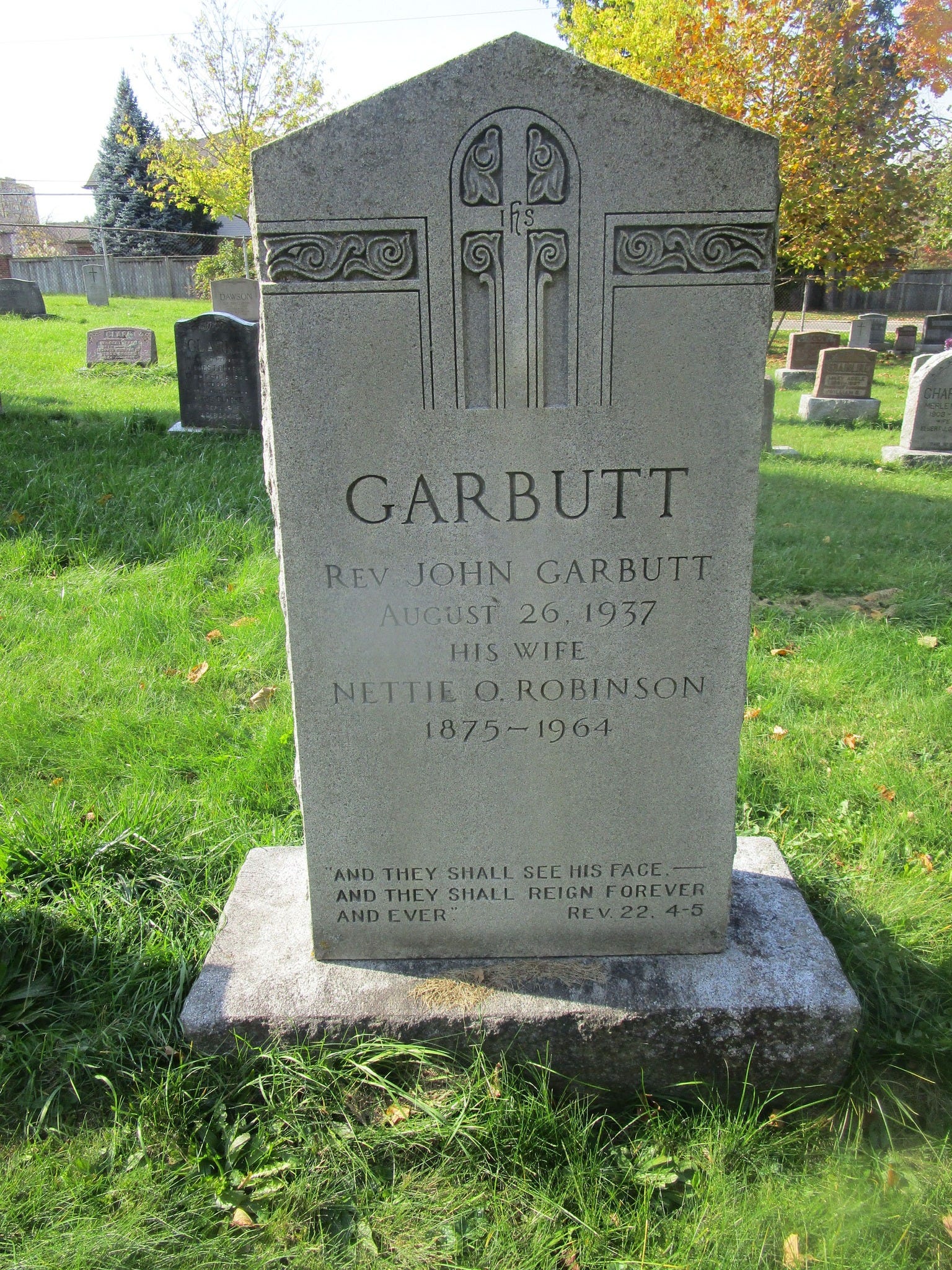
Chaplain John Garbutt passed away in London, Ontario in 1937.
Remember them.
Resources
Montreal Gazette – Wed Oct 9, 1918
“Absolutely Incapable of Carrying on” Shell Shock, Suicide, and the Death of Lieutenant Colonel Sam Sharpe - Matthew Barrett
Canada and the Great War, Various Authors, 1921 p.116